
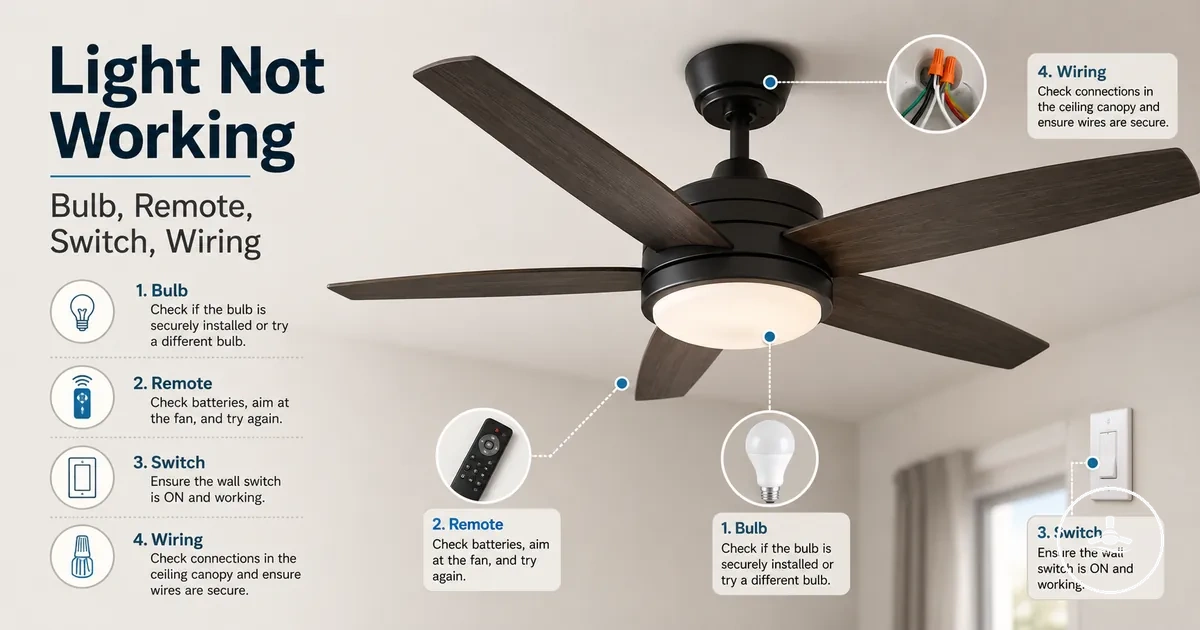
Ceiling Fan Light Not Working: Causes, System Behavior, and Troubleshooting Scope
When a ceiling fan light stops working, the fault source may sit in power delivery, wiring, controls, or the LED module. Troubleshooting should define the full system before narrowing the cause.
A ceiling fan light works through connected parts, not one isolated component. The control system must send the right signal, the wiring must carry power safely, and the light output component must respond. A failed bulb, remote receiver, wall switch, loose connection, or internal light kit fault can create the same visible symptom. This means the first boundary is diagnosis, not repair.
Safe troubleshooting starts by treating the fixture as an electrical system that may need power isolation before inspection. The next sections break the system into causes, symptoms, and checks for ceiling fans with lights.
Understanding Why a Ceiling Fan Light Stops Working and How the Lighting System Is Structured
A ceiling fan light system is an electrical chain that moves from power input to a control layer and then to the light module. In ceiling fans with lights, the activation system depends on each layer passing power or a control signal to the next part.
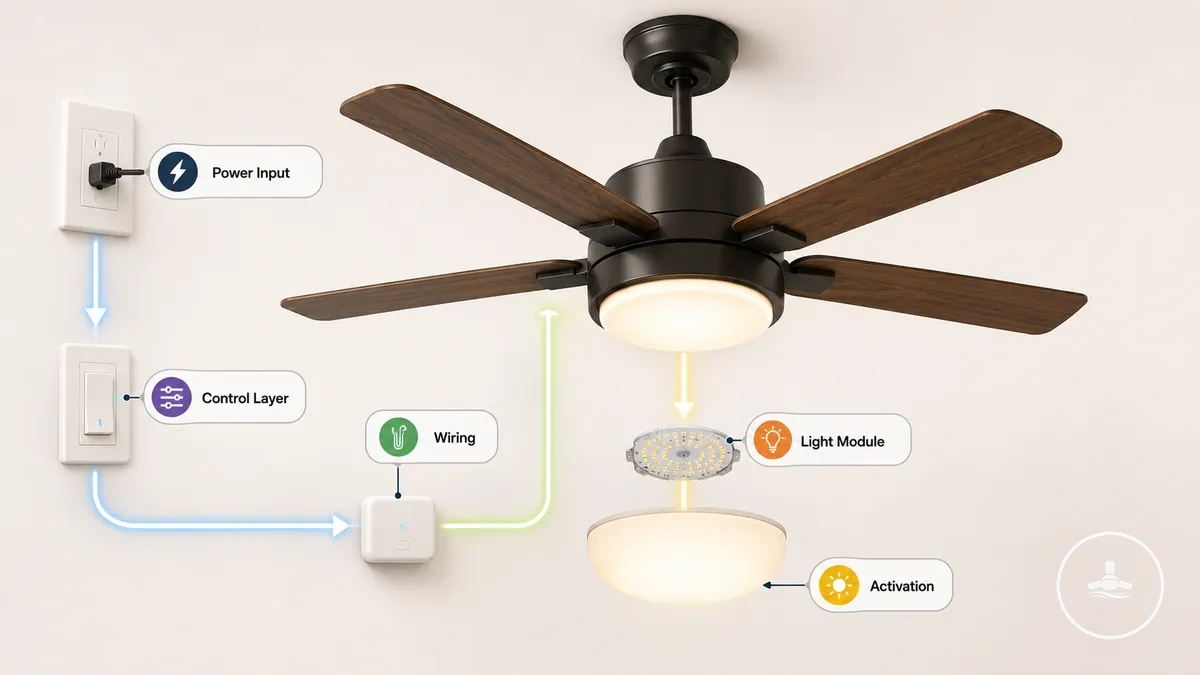
The power input may come through a wall switch, breaker-fed circuit, or internal wiring path before the light can respond. The control layer may include a wall control, pull chain, remote receiver, or smart control, depending on the fan design. The light module then turns delivered power and a control signal into visible output through a bulb, LED module, or light kit.
A ceiling fan light can stop working when any part of this electrical chain fails or loses continuity. The visible symptom may look the same even when the fault sits in the power input, control layer, wiring path, or light module, so the system structure should be understood before assigning one cause.
Common Symptoms When a Ceiling Fan Light Stops Working or Becomes Unresponsive
A ceiling fan light can show different failure patterns depending on where the electrical chain is interrupted. Observing how the light behaves helps distinguish whether the symptom may relate to the power supply, control system, or light module without assuming a specific fault. If the light flashes instead of remaining steady, see flickering ceiling fan light for a focused explanation.
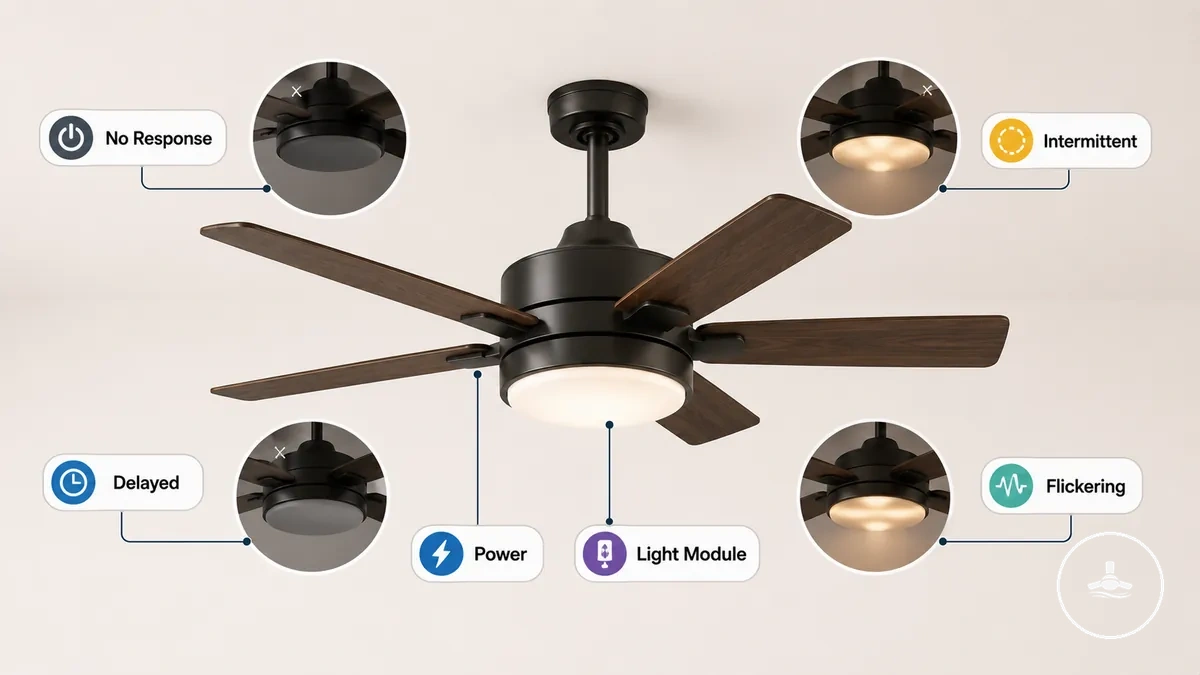
- No response: The light does not turn on after using a wall switch, pull chain, or remote control.
- Intermittent lighting: The light works temporarily before switching off or responding inconsistently, which may indicate an interruption within the electrical chain.
- Delayed activation: The light turns on only after a noticeable delay following a control input.
- Flickering: The light repeatedly brightens, dims, or flashes instead of maintaining steady illumination.
- Fan operates but light does not: The fan motor continues to run while the light remains off, suggesting the lighting circuit may be affected separately from the fan circuit.
Power Supply, Wall Switch, and Remote Receiver Issues Affecting Ceiling Fan Light Operation
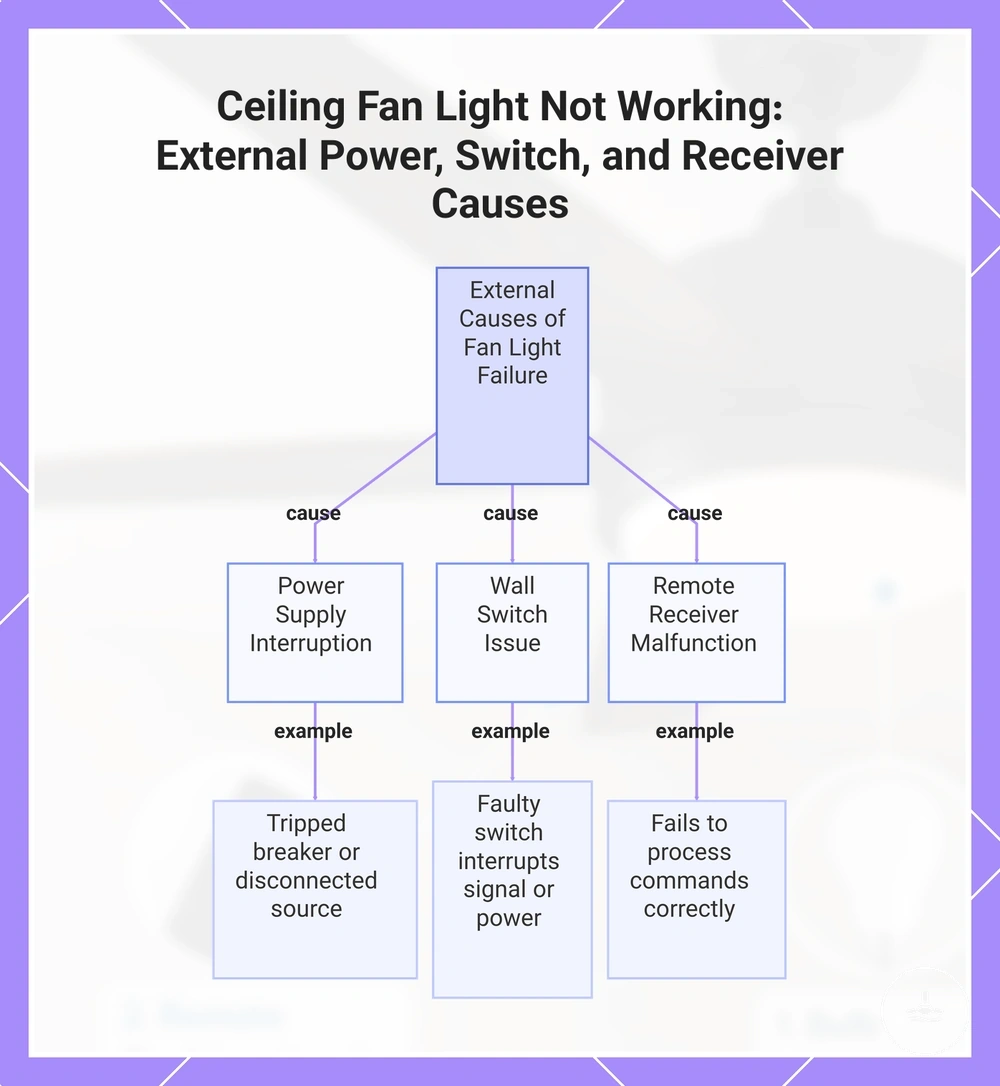
When a ceiling fan light does not respond, the interruption may occur before power reaches the light module. External electrical and control components such as the circuit breaker, wall switch, or remote receiver can interrupt power delivery or the control signal, even when the light assembly itself may not be the source of the problem.
- Power supply interruption: A tripped circuit breaker, disconnected power source, or interrupted electrical supply may prevent the light from receiving power.
- Wall switch issue: A faulty or incorrectly functioning wall switch may interrupt signal continuity or power delivery to the ceiling fan light.
- Remote receiver malfunction: A receiver that does not process commands correctly may prevent the light from responding even when other parts of the control system appear to operate normally.
This chart shows the three common external causes that can interrupt power or control signals to a ceiling fan light, even when the light module itself is not faulty.
Bulb, LED Module, and Light Kit Failures Causing Complete Light Loss
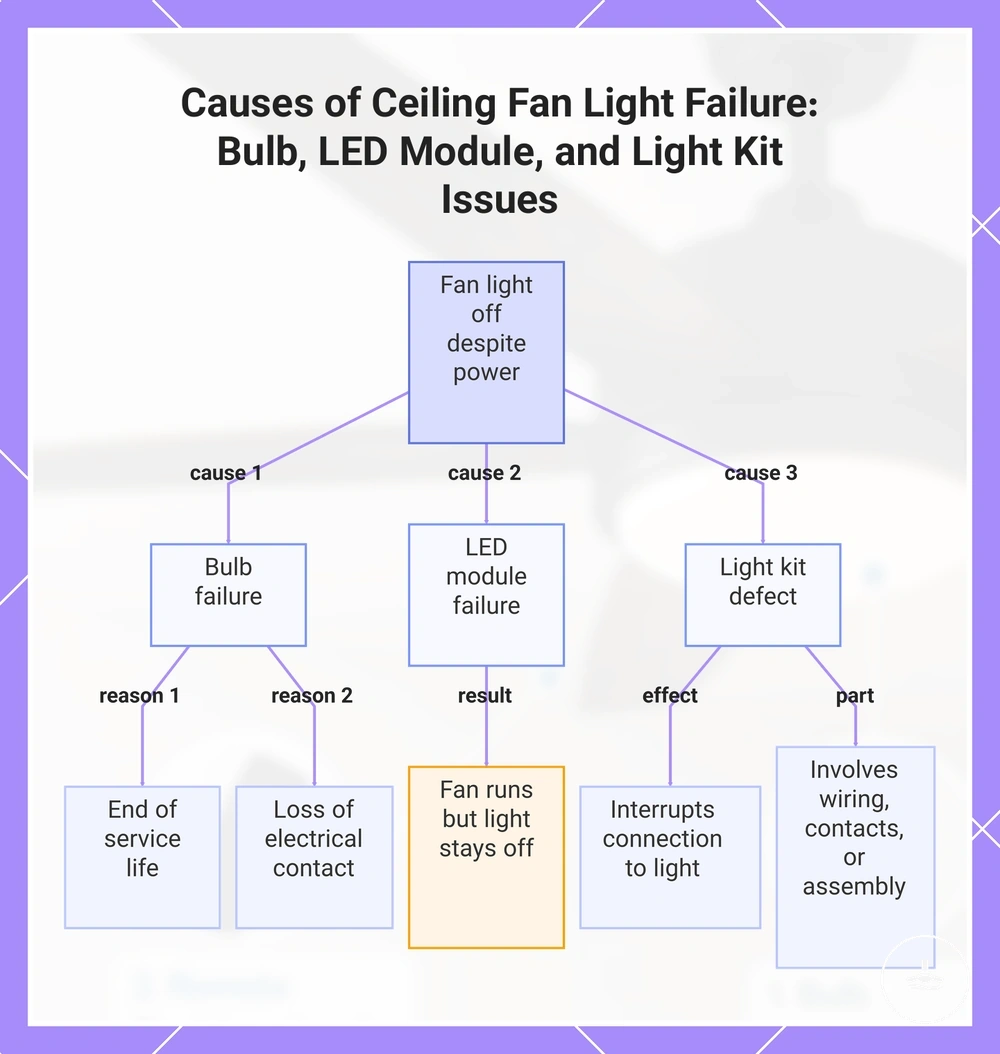
When a ceiling fan light remains off even though power appears to be available, the light-emitting component may be interrupting illumination. A failed bulb, an LED module that no longer produces light, or a defective light kit can prevent the fixture from illuminating while power continues to reach the lighting assembly.
A bulb may stop producing light after reaching the end of its service life or if electrical contact is no longer maintained. An integrated LED module may also fail, leaving the fan operational while the lighting function remains unavailable. In fans with integrated lighting, the LED module is often part of the light assembly rather than a separate replaceable bulb.
A light kit defect may interrupt the connection between the incoming power and the light-emitting component. Depending on the fan design, the interruption may involve internal wiring, electrical contacts, or the light assembly itself, resulting in complete light loss even though the fan motor continues to operate.
This chart shows three common causes of complete light loss in a ceiling fan light when power is available, along with their specific failure mechanisms.
Wiring Problems and Loose Electrical Connections in Ceiling Fan Light Circuits
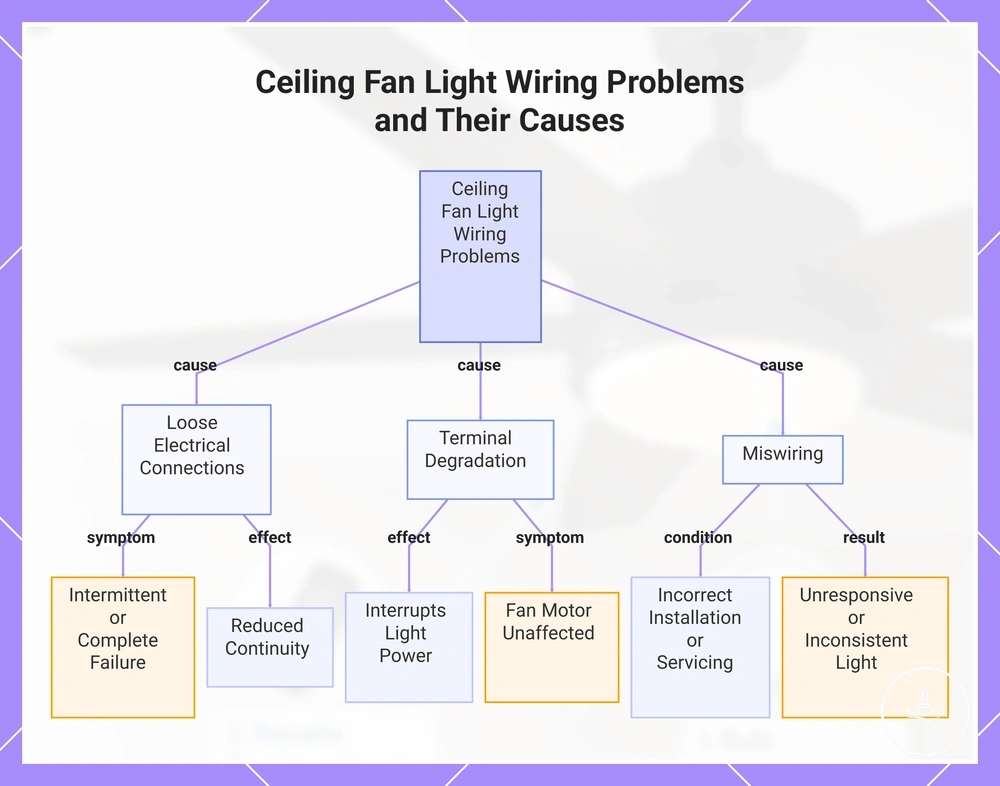
When a ceiling fan light works intermittently or stops working completely, wiring continuity may be interrupted by loose electrical connections, terminal degradation, or incorrect wiring. Even when electrical power is available at the circuit, an incomplete connection can prevent consistent power delivery to the light assembly. For broader installation context, see wiring requirements.
- Loose electrical connections: Connections within the fan housing or light kit may loosen over time, reducing electrical continuity and causing intermittent or complete light failure.
- Terminal degradation: Worn terminals, damaged conductors, or deteriorated electrical contacts may interrupt power delivery to the light circuit even when the fan motor continues to operate.
- Miswiring: Incorrect wiring connections during installation or servicing may prevent the light circuit from receiving the intended power or control signal, resulting in an unresponsive or inconsistent ceiling fan light.
This chart shows the three main wiring issues that cause ceiling fan light failures, along with their symptoms and effects.
Internal Component Failures Including Capacitor, LED Driver, and Light Control Module
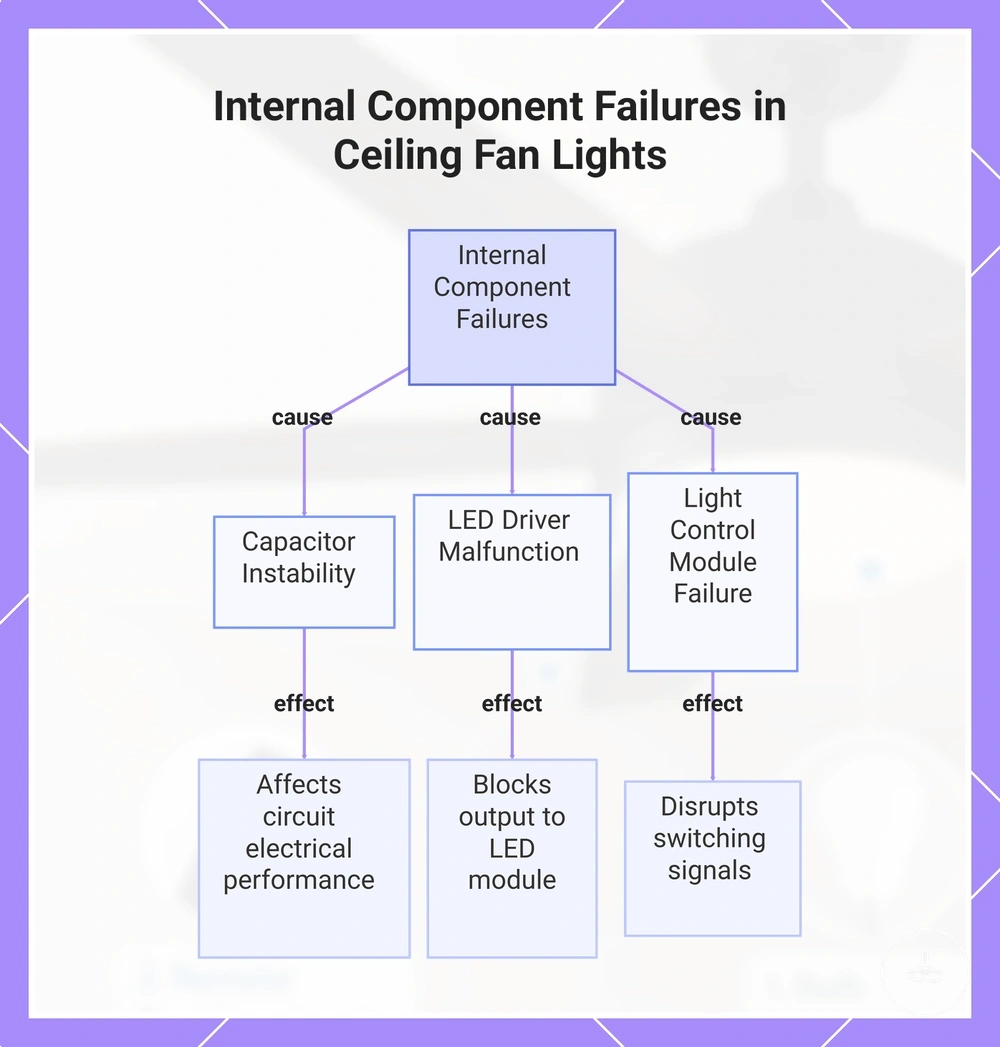
When a ceiling fan light receives power but produces unstable or no illumination, an internal electronic component may be malfunctioning. A capacitor, LED driver, or light control module can interrupt the regulation or delivery of power to the light source, even when the external wiring and controls appear to function normally.
A capacitor that becomes unstable may affect electrical performance within the lighting circuit. An LED driver malfunction may prevent the LED module from receiving the output needed for normal illumination, while a failed light control module may interrupt the switching or control signals required to activate the light.
Because these components operate together within the lighting system, failure in a single component can result in complete light loss, unstable illumination, or an unresponsive light while the ceiling fan motor continues to operate. The underlying cause depends on which internal component is no longer functioning correctly.
This chart identifies the three internal components that can fail and explains how each one affects the lighting circuit.
Step-by-Step Troubleshooting Process for Diagnosing Ceiling Fan Light Failures
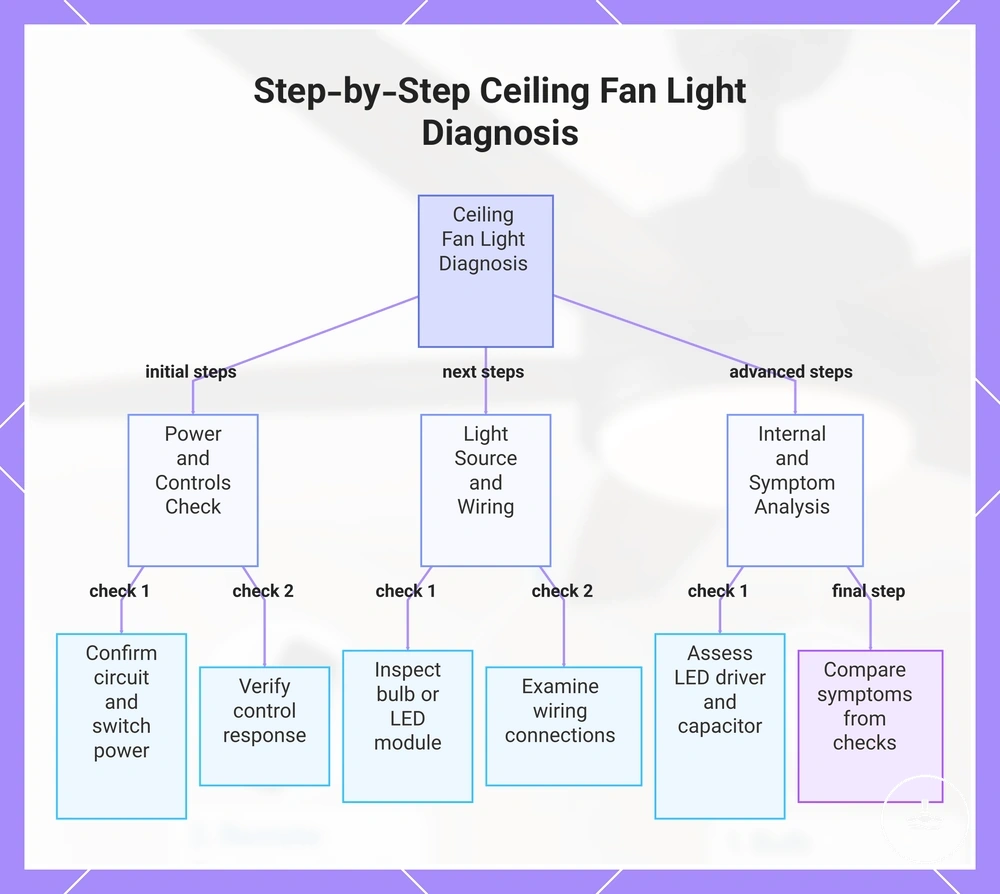
Diagnosing a ceiling fan light starts with the power supply and progresses through the control system, light source, wiring, and internal electronic components. Following this sequence can help narrow the fault before assuming that a single component has failed. Routine cleaning and maintenance may also support inspection by making loose connections or visible damage easier to identify.
- Check the power supply: Confirm that the circuit has power and that the wall switch and circuit breaker are in their normal operating positions.
- Test the control system: Verify that the wall switch, pull chain, remote control, or receiver responds correctly and that the light command reaches the fan.
- Inspect the bulb or LED module: Check whether the light source is producing illumination or may no longer be functioning.
- Examine wiring connections: Look for loose terminals, damaged conductors, or incorrect wiring that could interrupt continuity within the lighting circuit.
- Assess internal components: If earlier checks do not identify the fault, consider whether the LED driver, capacitor, or light control module may be interrupting normal light operation.
- Compare the observed symptoms: Use the results from each previous step to narrow the most likely cause instead of assuming that one component is responsible.
This chart shows the sequential troubleshooting steps to diagnose a ceiling fan light failure, from power checks to symptom analysis.
Safety Checks and When to Call an Electrician for Ceiling Fan Light Problems
A ceiling fan light problem should be treated as a safety concern when exposed wiring, an unstable fixture, or repeated electrical faults are present. If the cause cannot be identified through basic visual checks or the light continues to fail after routine troubleshooting, professional assessment may be appropriate. Review the safety checklist before deciding whether further inspection is safe.
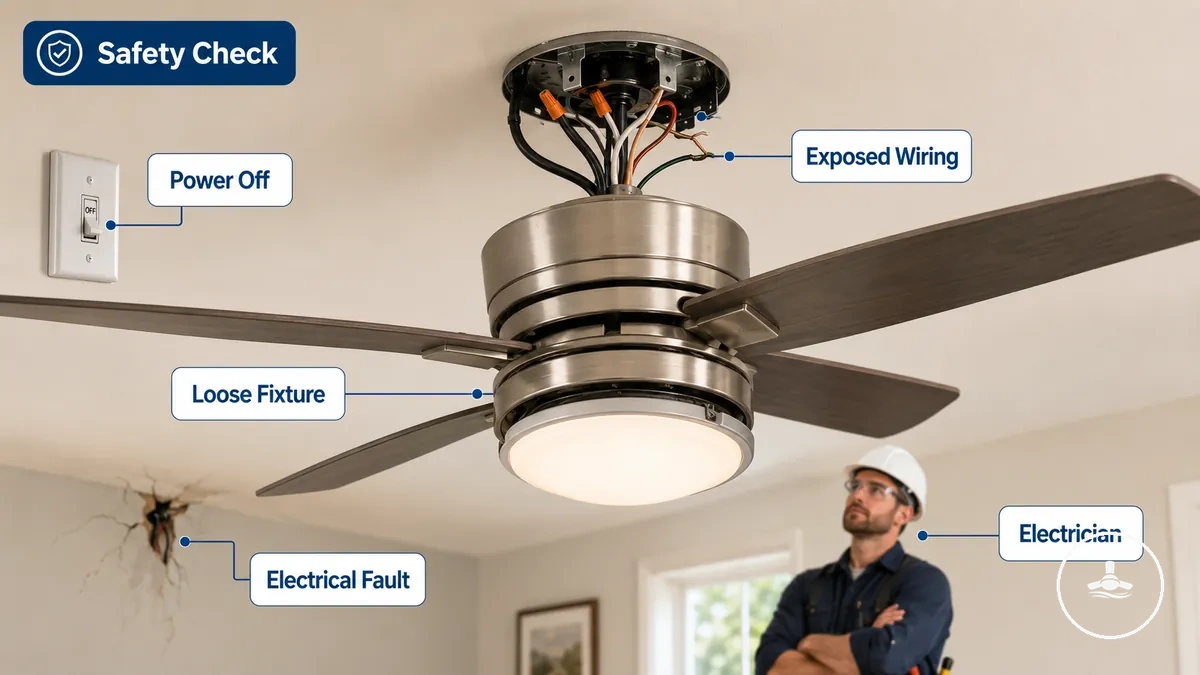
- Exposed wiring: Do not touch damaged or exposed conductors. Isolate power before performing any visual inspection.
- Unstable fixture: A ceiling fan or light kit that appears loose, moves during operation, or is not securely mounted should be inspected before continued use.
- Signs of electrical damage: Burning odours, visible scorching, sparking, or overheating may indicate an electrical fault that requires prompt attention.
- Persistent light failure: If the light remains unresponsive after checking the power supply, controls, light source, and visible wiring, the fault may involve internal electrical components.
- When to call an electrician: Seek qualified electrical assistance if wiring damage is suspected, safe inspection is not possible, or the fault cannot be identified without accessing electrical components.