

Ceiling Fans with Lights vs Without Lights
A ceiling fan with light or a ceiling fan without light is a better fit depending on your existing room lighting, ceiling space, visual preference, control needs, and future flexibility. A ceiling fan with light combines airflow and lighting in one fixture, while a ceiling fan without light focuses on airflow and relies on separate lighting. The more suitable option depends on how those conditions match your room.
This comparison focuses on the different roles each fan type can play in a room. A ceiling fan with light may suit spaces where the built-in light supplements or replaces part of the room lighting, while a ceiling fan without light may be more suitable when separate lighting already meets the room's needs. The decision should be based on room fit rather than assuming either option is the stronger choice for every space. Lighting needs and airflow needs should be considered separately.
Key decision factors include room lighting, ceiling space, visual weight, control needs, light kit options, replacement flexibility, and overall value. If lighting convenience is a priority, a lighted ceiling fan may be the better fit. If independent lighting is preferred, a no-light fan may provide a cleaner profile while allowing greater flexibility with separate lighting. For a broader comparison of available options, see the ceiling fans with lights guide.
The summary below organises the main room-fit criteria for Ceiling Fans with Lights vs Without Lights before the article explores each factor in more detail.
| Decision factor | Ceiling fan with light | Ceiling fan without light |
|---|---|---|
| Room lighting | May supplement or replace part of the room lighting, depending on the space. | Relies on separate lighting fixtures. |
| Airflow | Provides airflow with an integrated lighting function. | Provides airflow without a built-in light. |
| Visual weight | May appear more prominent because of the built-in light. | Often has a cleaner profile. |
| Control needs | May involve separate or combined fan and light controls, depending on the configuration. | Keeps fan operation separate from room lighting. |
| Replacement and flexibility | Future replacement options may depend on the light kit design. | Allows lighting to remain separate from the fan, depending on the room layout. |
| Value | Depends on whether combined airflow and lighting better suit the room. | Depends on whether existing lighting already meets the room's needs. |
What Changes When a Ceiling Fan Includes a Light
A ceiling fan that includes a light is a combined fixture that provides both airflow and integrated lighting. The fan continues to move air while adding a lighting function to the same ceiling fixture. This changes the fan from an airflow-only fixture to a combined fixture.
What changes when a ceiling fan includes a light is that the fixture can contribute to room lighting as well as air circulation. This may affect brightness, controls, replacement access, wiring dependency, and the overall visual effect, although these attributes can vary by model and room configuration. For a detailed explanation of the components involved, see what ceiling fans with lights include. A fan light may supplement or partly replace room lighting depending on the existing lighting plan.
What Changes When a Ceiling Fan Includes a Light becomes easier to understand by separating the added lighting function from the airflow function. The image below highlights the added fixture element before the comparison summarises the main decision effects.
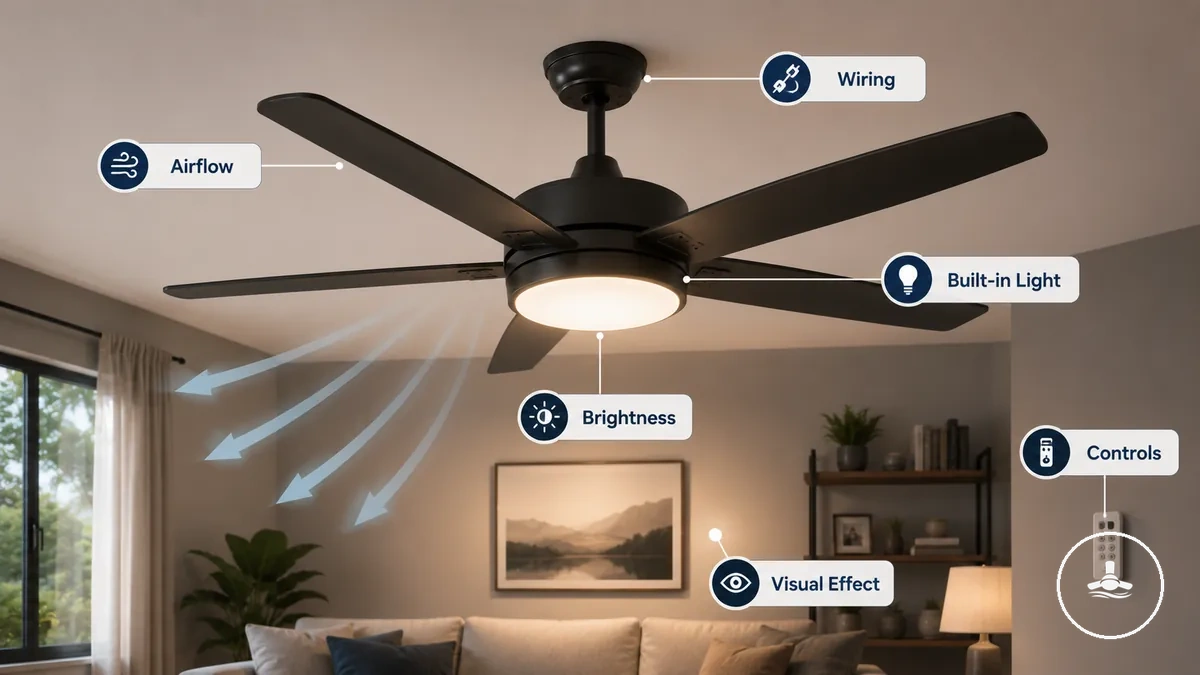
| Change | Why it matters | Decision effect |
|---|---|---|
| Lighting inclusion | Adds integrated lighting alongside airflow. | May reduce the need for a separate ceiling light in some rooms. |
| Controls | Fan and light controls may vary by configuration. | Control preferences can influence the selection. |
| Replacement access | Light-related components may require separate replacement considerations. | Future maintenance can vary by design. |
| Visual effect | The built-in light changes the fixture's depth and appearance. | May influence how the fixture fits the room. |
| Wiring dependency | Electrical requirements may differ depending on the model and existing setup. | Compatibility depends on the room's electrical configuration. |
Built-In Fan Lighting Compared with Separate Room Lighting
Built-in fan lighting and separate room lighting serve different roles, and the better fit depends on how the room is used. Built-in fan lighting combines airflow and illumination from one ceiling fixture, while separate room lighting allows light to come from a ceiling light, wall light, or lamp. The image below shows how Built-In Fan Lighting Compared with Separate Room Lighting changes light placement, spread, ambience, and control.
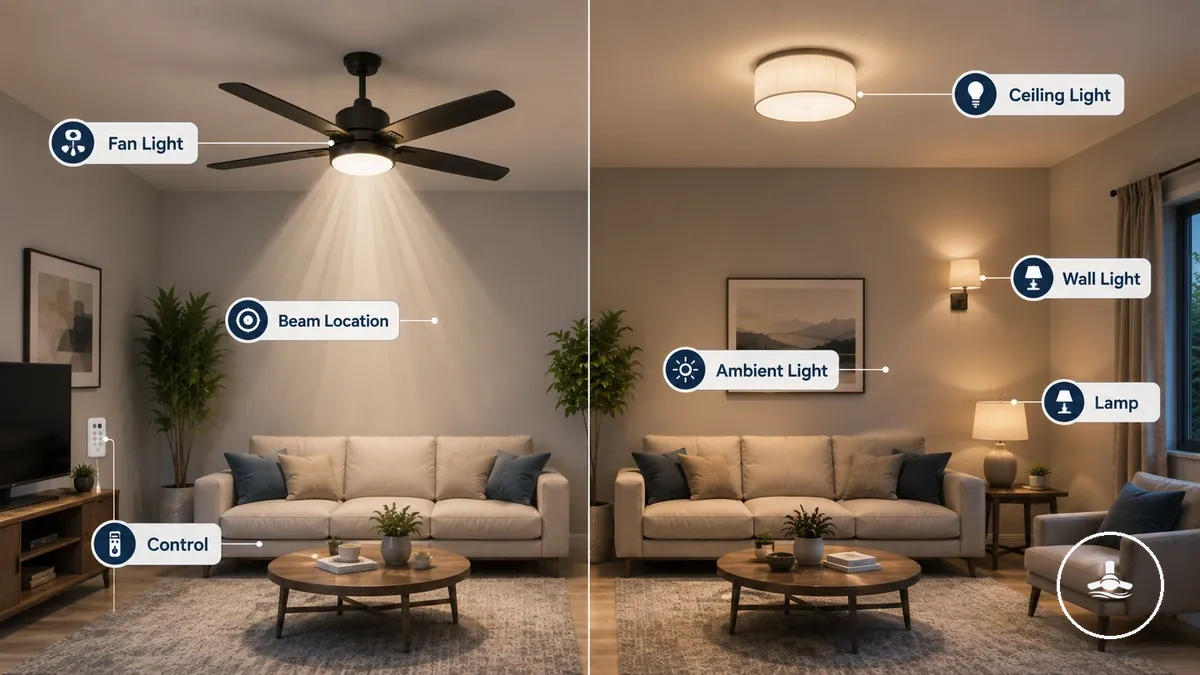
When a room needs both ambient lighting and task lighting, the light source can influence beam location, brightness, glare, and visual balance. Integrated fan-mounted lighting may suit rooms where convenience matters, while separate room lighting can offer more control by placing light closer to specific activities or areas. Brightness and glare depend on fixture design and room layout rather than the lighting type alone. For more detail about built-in lighting performance, the table below compares the main decision factors.
| Lighting option | Strength | Limitation | Better fit |
|---|---|---|---|
| Built-in fan lighting | Combines airflow and lighting in one fixture. | Brightness and beam location may not suit every room. | Rooms that benefit from a combined ceiling fixture. |
| Ceiling light | Provides central ambient lighting. | Does not contribute to airflow. | Rooms that already use a separate ceiling fan. |
| Wall light | Can support visual balance and focused illumination. | Coverage depends on wall placement. | Spaces needing layered ambient lighting. |
| Lamp or layered lighting | Offers flexible light placement for task lighting. | May require multiple light sources. | Rooms where lighting needs vary by activity. |
Ceiling Fans with Lights: Benefits and Trade-Offs
A ceiling fan with light combines airflow and lighting in one fixture, making it a practical option when both functions are needed from the same ceiling position. The main benefit is having a combined fixture, while the trade-offs depend on room fit, light quality, maintenance, and replacement considerations.
When a room has limited ceiling fixture positions, a ceiling fan with light can provide central illumination and airflow from a single location. Control convenience may vary depending on whether the fixture uses a wall switch, remote, or another control method. Light quality, appearance, maintenance, and replacement needs also vary by fixture design and room configuration. The comparison below balances the practical benefits against the main trade-offs without assuming a ceiling fan with light is the right choice for every room.
| Benefit | Trade-off | Decision signal |
|---|---|---|
| Combined fixture | Combines airflow and lighting into one ceiling fixture. | Suitable when ceiling fixture positions are limited. |
| Central illumination | Light quality and brightness depend on the room and fixture. | Consider whether the lighting suits the intended room fit. |
| Control convenience | Available controls may vary by switch, remote, or configuration. | Match the control method to everyday use. |
| Appearance | An integrated light may change the fixture's visual presence. | Consider the ceiling layout and overall room appearance. |
| Space efficiency | Maintenance and replacement needs may differ depending on the light design. | Consider future access to light parts before deciding. |
Ceiling Fans Without Lights: Benefits and Limits
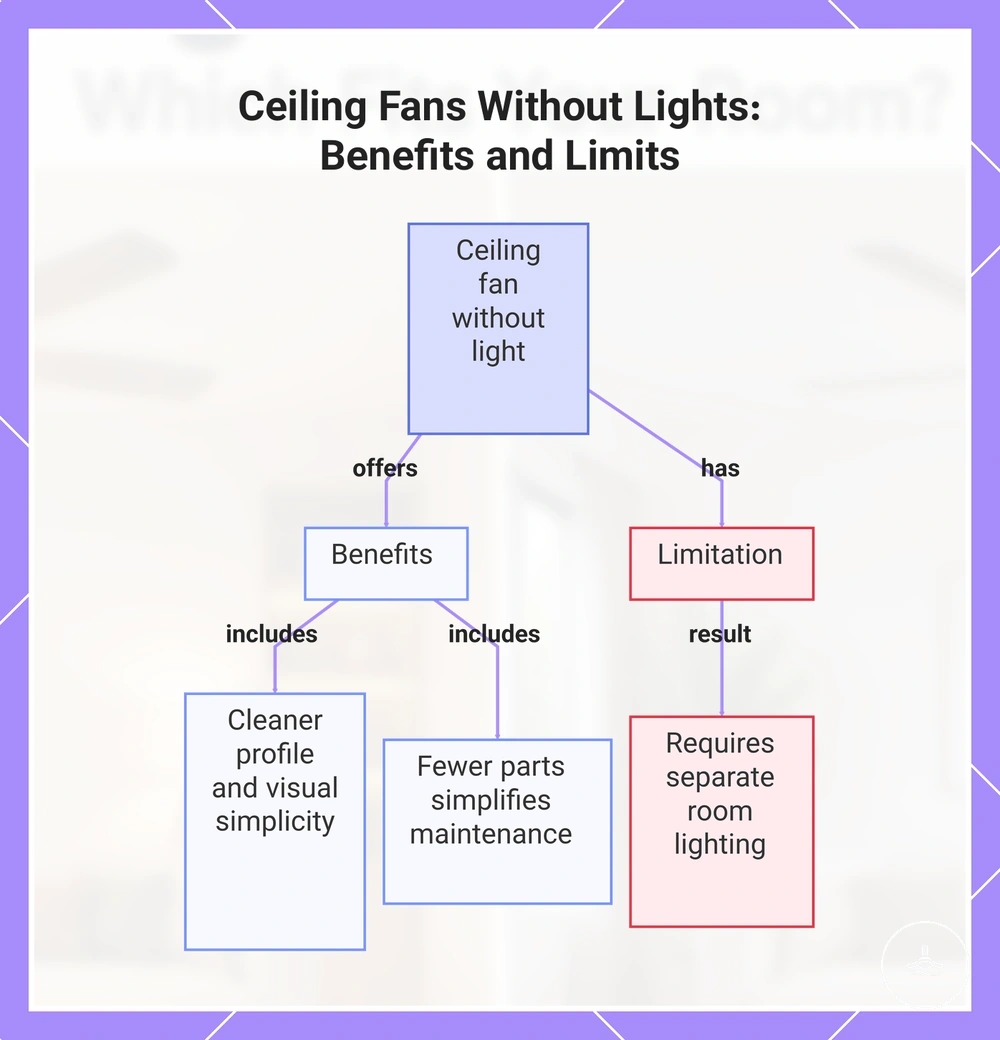
A ceiling fan without light is a deliberate choice when room lighting is already provided by separate lights. Its main benefits are a cleaner profile, fewer lighting parts, and a design that suits spaces where visual simplicity is preferred. The remaining limitation is that room lighting must come from another source.
When a room already has a ceiling fixture, layered lighting, or well-placed lamps, a ceiling fan without light can focus entirely on airflow without adding another overhead light. A cleaner profile may suit bedrooms, living rooms, or other spaces where glare from a ceiling light is less desirable, although the overall effect depends on the room layout and fixture design. Fewer lighting parts may also simplify maintenance and reduce light-related replacement needs. Separate lights must still provide the room lighting required for everyday use.
- Room lighting is already provided by separate lights.
- A cleaner profile and visual simplicity are priorities.
- Reducing glare from an overhead light may suit the room layout.
- Fewer lighting parts may simplify maintenance and future replacement.
- Separate lighting remains available because the fan does not include a light source.
This chart shows the main benefits and the key limitation of choosing a ceiling fan without an integrated light fixture.
Room Fit Criteria for Light and No-Light Fans
Room fit for light and no-light fans depends on the use case, existing lighting, ceiling height, ceiling fixture placement, visual weight, daylight, and user preference. A light fan may suit one layout, while a no-light fan may suit another when separate room lighting already meets the lighting plan. The decision is criteria-based rather than determined by room type alone.
When airflow and lighting priorities conflict, the room layout and lighting plan become more important than labels such as bedroom or living room. For example, a room with sufficient separate lighting may benefit from a no-light fan if visual simplicity is preferred, while a room with only one practical ceiling fixture placement may be better suited to a light fan. The Room Fit Criteria for Light and No-Light Fans table below organises the conditions that influence the decision.
| Room condition | Attribute or constraint | Value or signal | Better option |
|---|---|---|---|
| Existing lighting | Room lighting already meets daily needs. | Separate lights are available. | No-light fan may be suitable. |
| Ceiling fixture placement | Only one ceiling fixture position is available. | Airflow and lighting are needed from the same location. | Light fan may be suitable. |
| Ceiling height | Fixture appearance and visual weight affect room suitability. | Depends on the room layout. | Depends on the overall room fit. |
| Daylight | Natural light changes lighting demand. | Lighting needs may vary throughout the day. | Depends on the lighting plan. |
| Visual preference | User preference for a combined fixture or a cleaner profile. | Visual weight and layout influence the choice. | Depends on user preference and room fit. |
Review these room-fit conditions alongside the features to compare before choosing before comparing individual products or prices.
Bedroom Fit
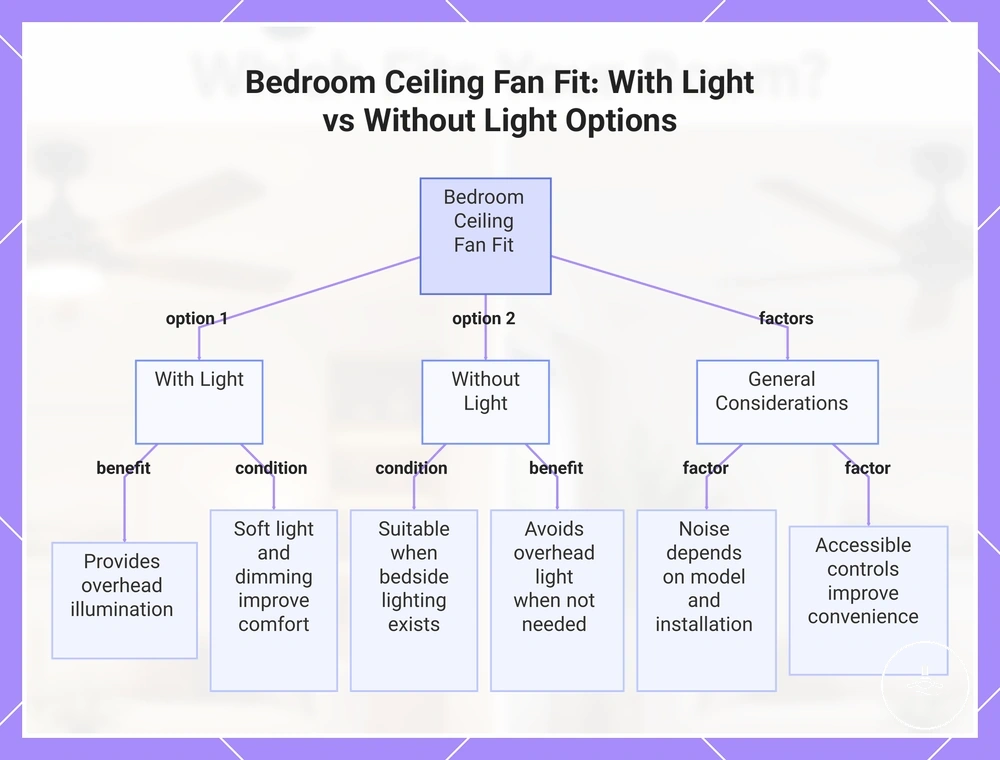
Bedroom fit depends on balancing sleep comfort with the room's lighting needs. A ceiling fan with light may suit bedrooms that benefit from overhead illumination, while a ceiling fan without light may be more suitable when bedside lighting or a separate lamp already provides the required light. The better fit depends on bedroom comfort, lighting control, and the room setup.
- Soft light and dimming may improve bedroom comfort for night use when the fan light and its controls support suitable brightness.
- Glare can vary with the fan light design, brightness setting, and room layout.
- A separate lamp or bedside lighting may make a ceiling fan without light a suitable choice when overhead lighting is not needed.
- Noise expectations depend on the fan model and installation, so bedroom comfort may vary by configuration.
- Accessible fan and light controls can improve night-time convenience, depending on the available control method.
This chart shows the two main bedroom ceiling fan options and key factors for balancing sleep comfort with lighting needs.
Living Room Fit
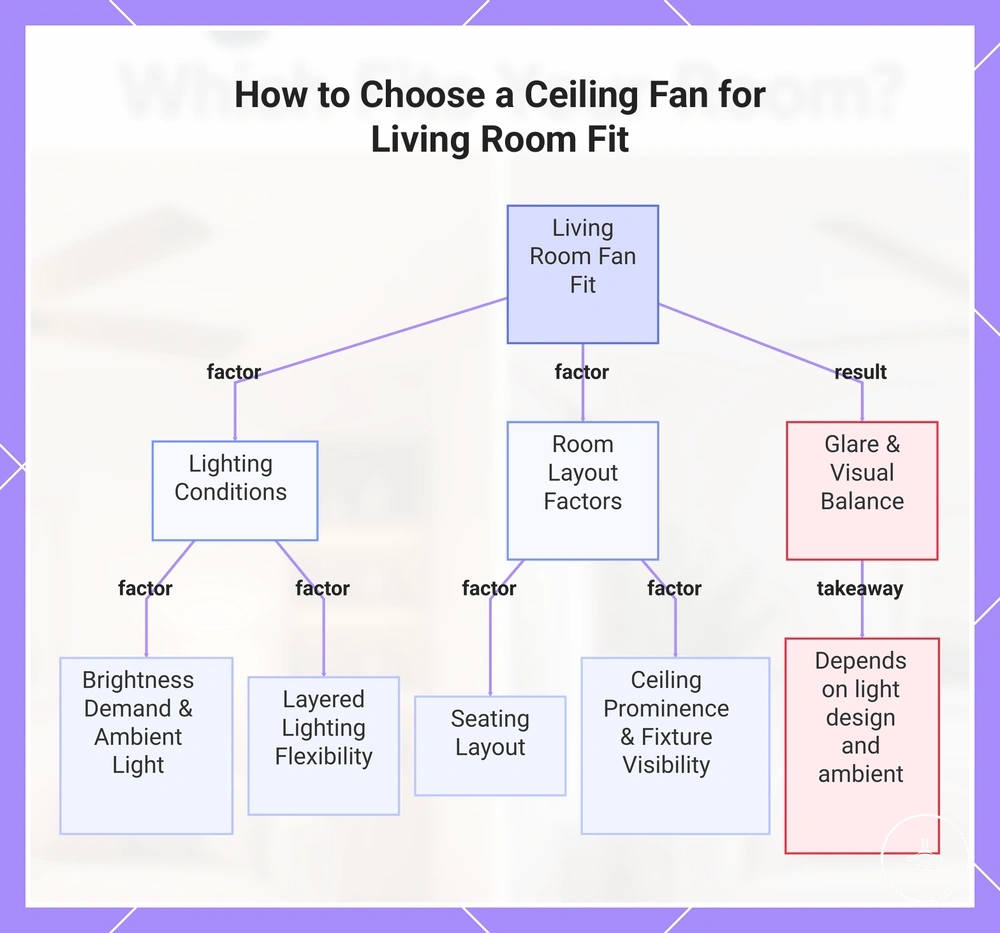
Living room fit depends on balancing brightness demand, layered lighting, seating layout, ceiling prominence, and existing ambient lighting. A fan light may suit living rooms that benefit from a central ceiling light, while a no-light fan may be a better fit when separate lighting already creates the desired visual balance. The more suitable option depends on the room layout and how the lighting layers work together.
- Layered lighting may provide greater flexibility when ambient lighting already comes from wall lights, lamps, or other separate lighting.
- A fan light may contribute to central brightness, depending on the room size, layout, and existing light sources.
- Seating layout can influence where light is most useful, so the lighting plan should reflect how the living room is used.
- Ceiling prominence and fixture visibility may influence whether a fan light or a no-light fan better supports the room design.
- Glare and visual balance depend on the light design, brightness settings, and existing ambient lighting rather than the fan type alone.
This chart shows the main factors that determine whether a fan light or no-light fan is a better fit for a living room, based on lighting conditions, room layout, and design balance.
Ceiling Height and Visual Weight
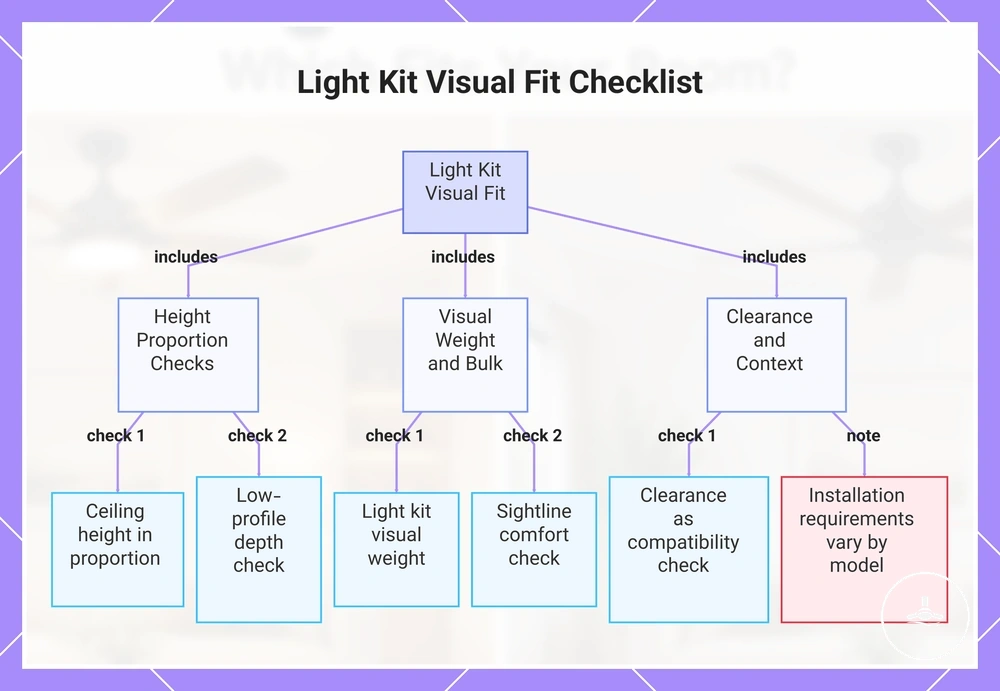
Ceiling height and visual weight influence whether a light kit feels suitable by changing the fixture depth, perceived bulk, and how the fan fits within the room. Clearance, comfort, and appearance may vary by model and installation context, so visual suitability should be considered separately from installation requirements. The checklist below helps assess visual fit rather than installation approval.
- Consider whether the ceiling height keeps the fan depth and light kit in proportion with the room.
- Check whether the light kit adds visual weight that changes the room proportion or makes the fixture appear bulkier.
- If there is a low-profile need, compare fixture depth to the available space because suitability depends on the model and installation context.
- Review the sightline from seating areas and entrances to judge comfort and overall appearance.
- Use clearance as a visual compatibility check only, since installation requirements may vary by model and installation context.
This chart outlines the key visual checks for assessing light kit fit based on ceiling height, visual weight, and clearance.
Light Kits, Integrated Lights, and Future Flexibility
Future flexibility depends on the fan configuration and whether it includes an integrated light, accepts an optional light kit, or has no light-kit support. These configurations influence how lighting choices may change over time, while compatibility, replacement, and upgrade options remain dependent on the specific fan model. The three main configurations are integrated light, optional light kit, and no light-kit support.
Fan configuration determines how much flexibility is available for future lighting decisions. In contrast, an optional light kit may reduce regret when lighting needs change because it keeps the option of adding compatible lighting later, whereas an integrated light or no-light-kit configuration offers different levels of flexibility. Compatibility, replacement, and control options should always be verified for the specific fan configuration. For a more detailed comparison of integrated lights and light kits, the table below focuses on future flexibility rather than technical installation.
| Configuration | Flexibility | Main limitation | Decision signal |
|---|---|---|---|
| Integrated light | Lighting is built into the fan configuration. | Replacement or upgrade options may depend on the model. | Suitable when a built-in light is expected to remain part of the lighting plan. |
| Optional light kit | May allow a compatible light kit to be added later. | Compatibility should be confirmed for the specific fan configuration. | Useful when future lighting requirements may change. |
| Replacement kit | May support replacement of compatible light components. | Availability and compatibility vary by fan configuration. | Consider when future maintenance or lighting updates are important. |
| No light-kit support | Designed for use without a light kit. | Future lighting upgrades through the fan may not be available. | Suitable when separate lighting is intended to remain the primary light source. |
Cost, Energy Use, and Replacement Value
Cost, energy use, and replacement value should be considered together because total value depends on more than the initial purchase cost. The choice between a ceiling fan with light and a ceiling fan without light is influenced by purchase cost, energy use, installation complexity, control compatibility, and replacement access. Together, these factors define value broadly.
Purchase cost and price range can vary between fan types because an included light may add features that are not present on a no-light model. Installation complexity and control compatibility can also influence value, depending on the fan configuration and existing room setup. Separate lighting may reduce the need to pay for an integrated light, while a combined fixture may justify the purchase cost when both airflow and lighting are needed.
Energy use and replacement value also affect long-term cost. Running cost may depend on how often the light is used as well as the fan itself. Replacement access can differ between bulb replacement, module replacement, or separate lighting, so future maintenance may vary by model and fan configuration.
Cost, Energy Use, and Replacement Value are easier to compare when each value factor is viewed side by side. For a broader explanation of cost and value factors, the table below organises the main decision signals without assuming one option always provides greater value.
| Cost factor | Lighted fan impact | No-light fan impact | Decision signal |
|---|---|---|---|
| Purchase cost | May include the cost of an integrated light. | May have a lower upfront cost when separate lighting is already available. | Choose based on whether combined lighting is needed. |
| Energy use | Depends on both fan operation and light use. | Depends on the fan, while separate lighting is managed independently. | Consider how the room will be used. |
| Replacement access | Bulb replacement or module replacement depends on the fan configuration. | Lighting replacement remains separate from the fan. | Compare future maintenance preferences. |
| Control compatibility | Fan and light controls may need to work together. | Fan and lighting controls remain separate. | Match the control arrangement to the room. |
| Installation condition | Overall value may depend on the existing ceiling setup. | Separate lighting may simplify the decision in some room layouts. | Assess the complete room configuration. |
Paying for an included light may be justified when one ceiling fixture is expected to provide both airflow and lighting. Separate lighting may preserve better value when existing light sources already meet the room's needs and the fan is intended only for air circulation. The stronger value outcome depends on the room layout, lighting plan, and future replacement preferences.
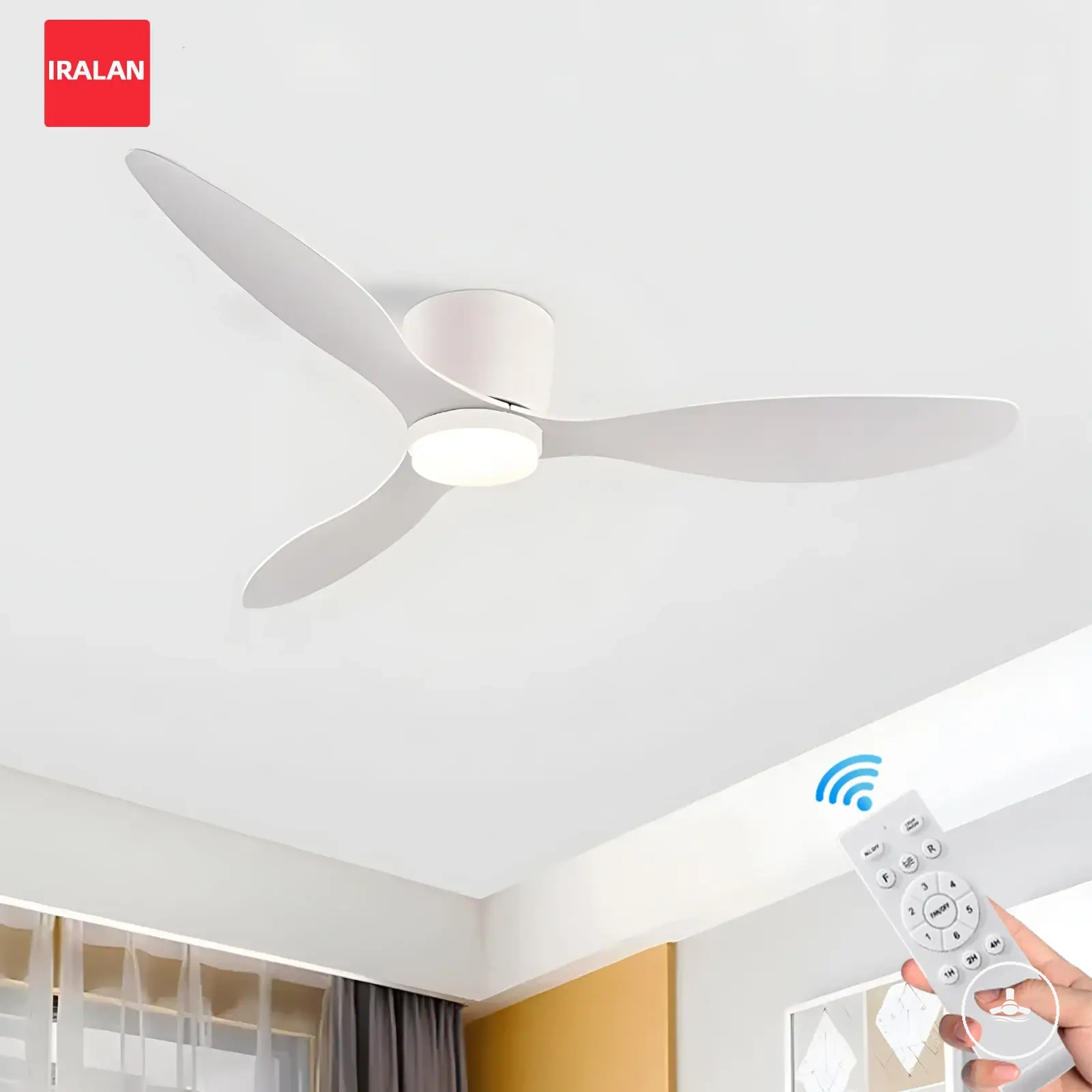
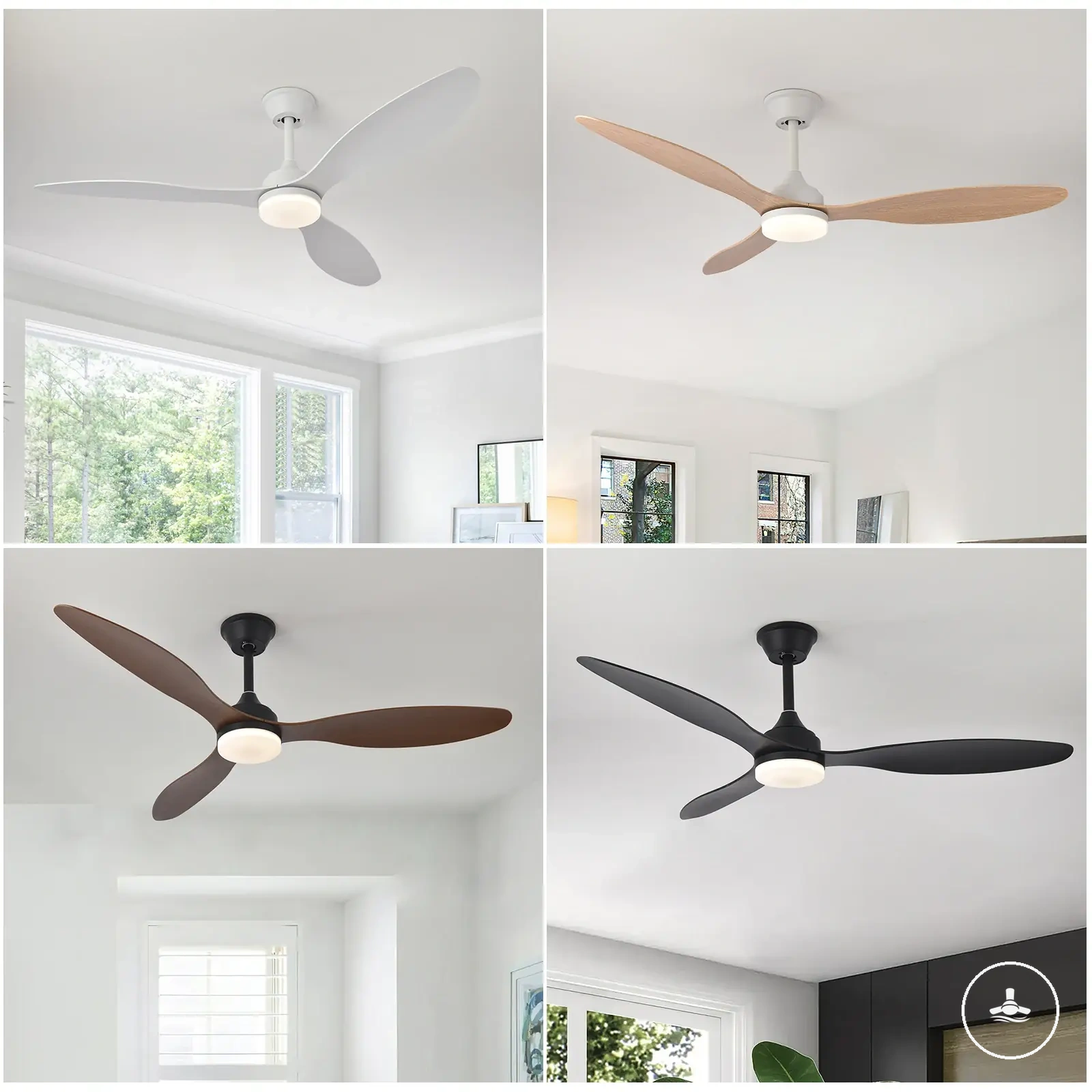
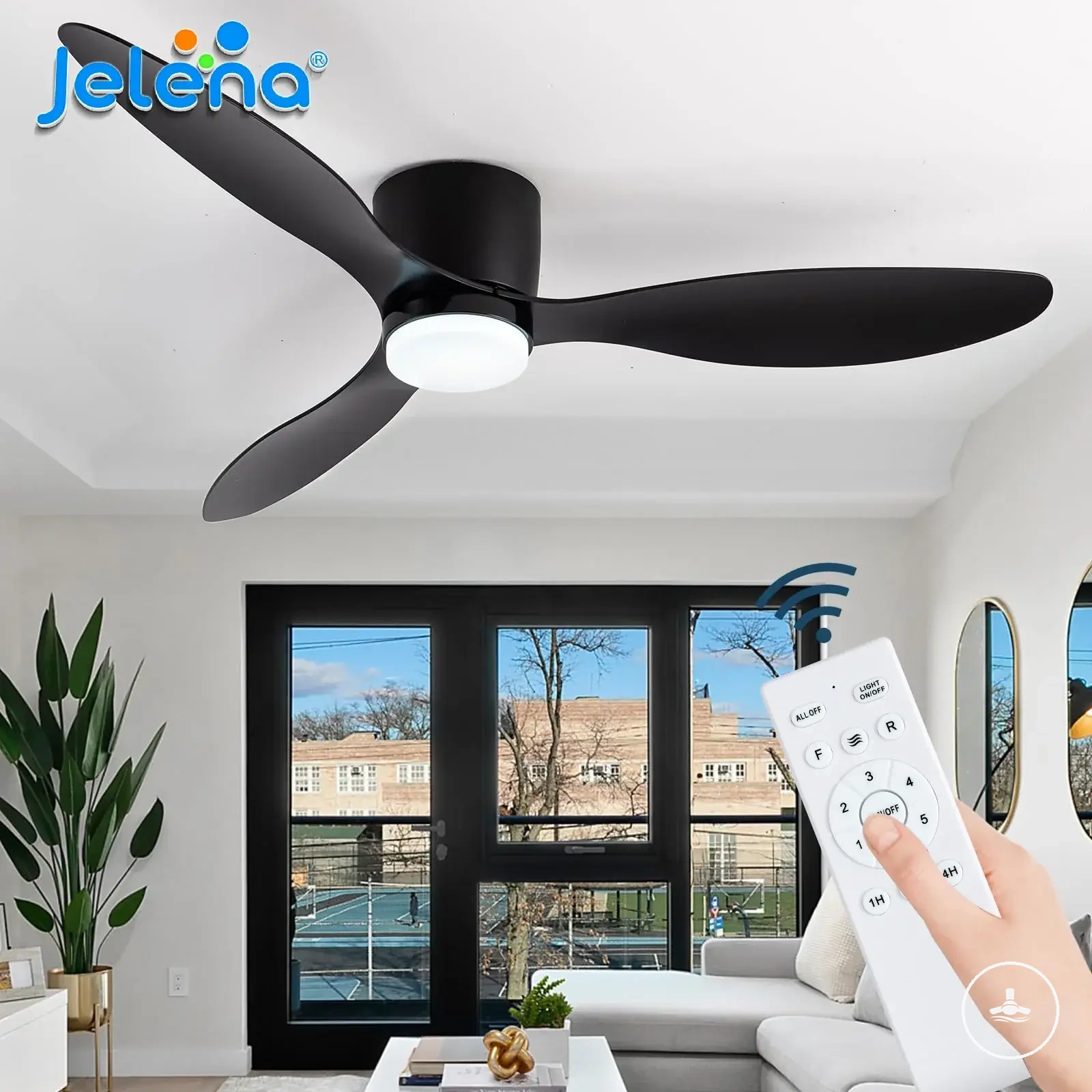
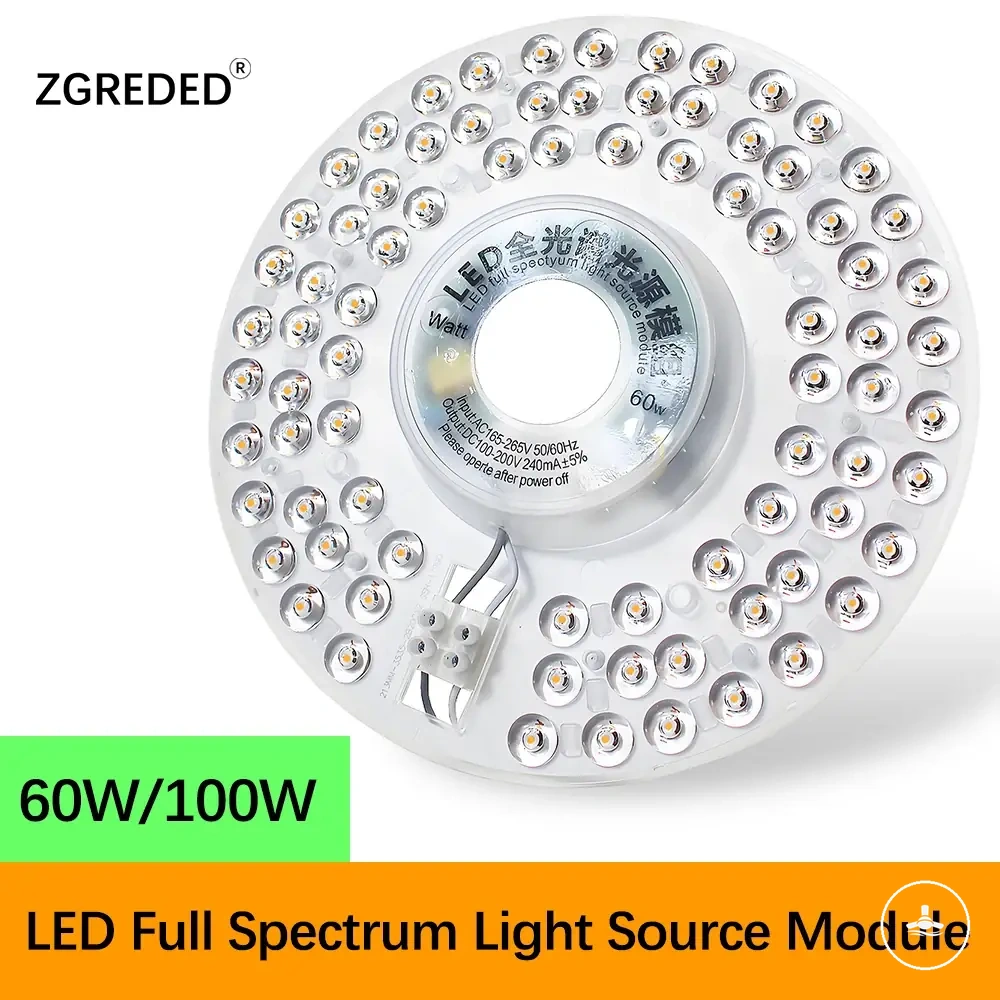
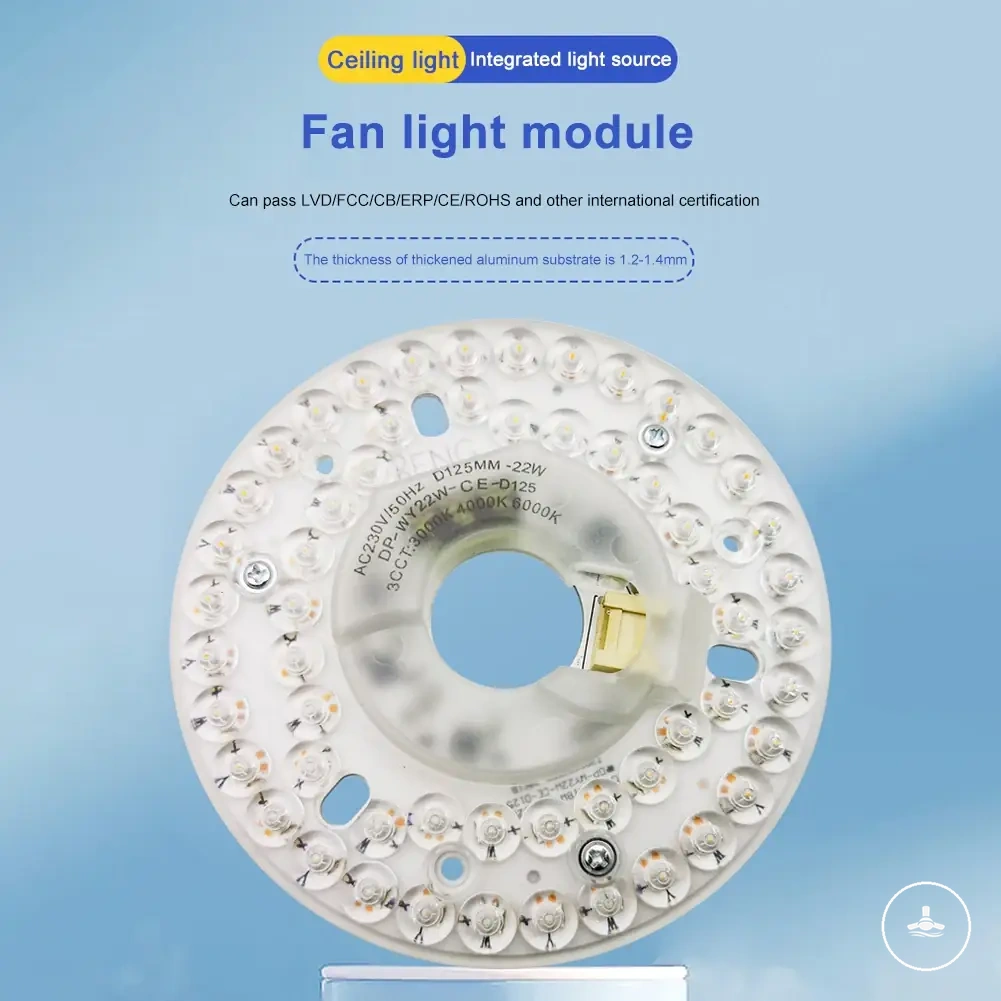
The products below are useful examples for comparing available options. Before buying, check that the compatibility criteria, key features, and product details match your needs.
When Each Ceiling Fan Type Makes More Sense
The selection rule is simple: choose a ceiling fan with light when the room has a lighting gap, and choose a ceiling fan without light when existing lighting already works well. The better fit depends on the light requirement, existing fixture, control preference, visual priority, maintenance tolerance, and future flexibility. The main selection rule is to match the fan type to the room condition, not to assume one option suits every space.
A ceiling fan with light may make more sense when one ceiling fixture needs to handle both airflow and illumination. A ceiling fan without light may make more sense when separate lighting already covers the room and a cleaner ceiling profile is preferred. Control preference matters because some rooms benefit from combined fan and light control, while others work better with separate controls. Maintenance tolerance also matters because added lighting parts may create future replacement considerations.
When Each Ceiling Fan Type Makes More Sense is easier to decide when the main conditions are placed side by side. The block below converts the earlier comparison into practical decision signals without repeating every benefit and trade-off.
| Choose a fan with a light when | Choose a fan without a light when | Check before deciding |
|---|---|---|
| The room has a lighting gap. | Separate lighting already meets the room's needs. | Confirm whether the fan is expected to provide illumination. |
| The existing fixture position needs to support both airflow and lighting. | The existing fixture or lamps already handle room lighting. | Review ceiling position and light placement together. |
| Combined control is preferred for the fan and light. | Separate fan and lighting controls are preferred. | Match the control preference to everyday use. |
| A built-in light does not add unwanted visual weight. | Visual priority favours a cleaner ceiling profile. | Consider fixture depth, sightline, and room style. |
| Maintenance tolerance allows for light-related parts. | Fewer lighting parts are preferred. | Consider future replacement access and compatibility. |
In a borderline case, an optional light kit may provide future flexibility when lighting needs could change but a fixed lighted fan feels premature. This option still depends on model compatibility, so it should be treated as a conditional safer choice rather than a guaranteed choice.
The products below are useful examples for comparing available options. Before buying, check that the compatibility criteria, key features, and product details match your needs.
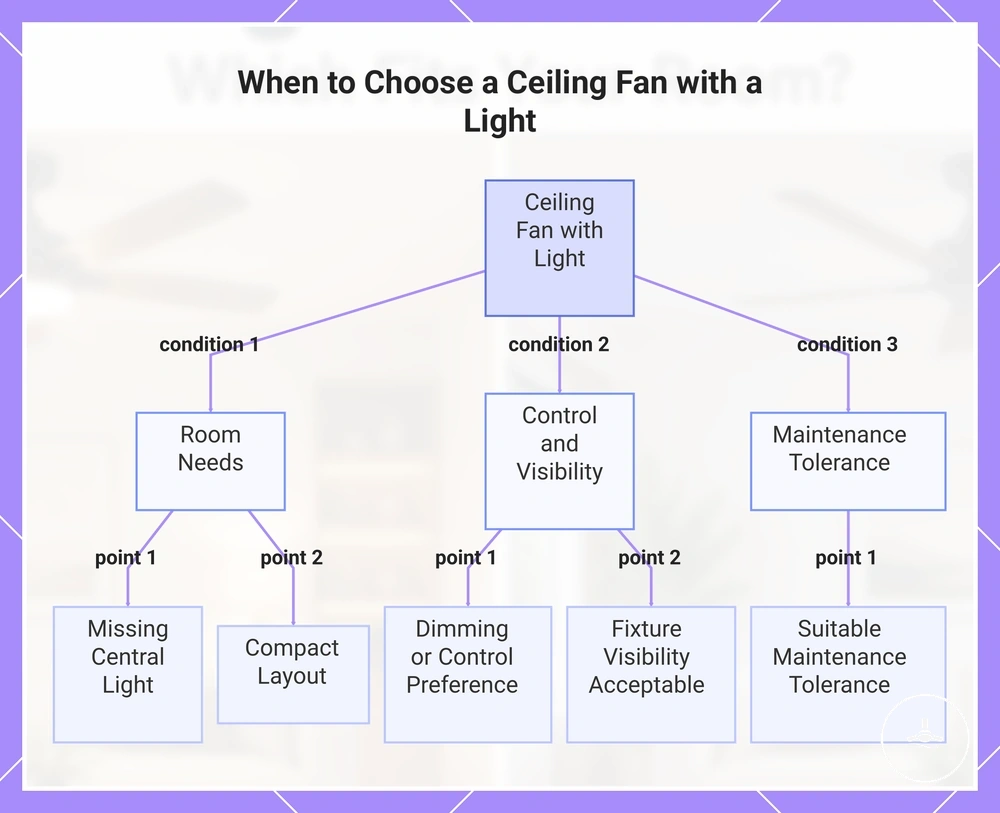
Choose a Ceiling Fan with a Light
Choose a ceiling fan with a light when the room needs airflow and illumination from the same fixture. This choice is strongest when the light solves a clear room need.
- Missing central light: a fan light may help when the room lacks a practical overhead light source.
- Compact layout: a combined fan and light may suit rooms where ceiling space is limited.
- Dimming or control preference: a lighted fan may fit when the available controls support the preferred room use.
- Fixture visibility is acceptable: a built-in light may work when the added visual presence still suits the room.
- Maintenance tolerance is suitable: a combined fixture may make sense when future light-related maintenance is acceptable.
This chart shows the key conditions that make a combined ceiling fan and light fixture a strong choice.
Choose a Ceiling Fan Without a Light
Choose a ceiling fan without a light when existing layered lighting already meets the room lighting needs. This choice is strongest when airflow is the priority, and the lighting is already handled elsewhere.
- Existing layered lighting: a no-light fan may suit rooms where ceiling lights, wall lights, or lamps already provide the required room lighting.
- Minimalist appearance: a cleaner profile may better match the preferred visual style when additional built-in lighting is unnecessary.
- Separate lighting control: independent control of the fan and room lighting may better suit the intended daily use.
- Fixture visibility: a fan without light may be appropriate when a simpler ceiling fixture is preferred, depending on the room design.
- Lower maintenance: fewer lighting parts may reduce light-related maintenance, but another lighting source is still needed for room lighting.